DemoDay – new technologies and innovative ideas
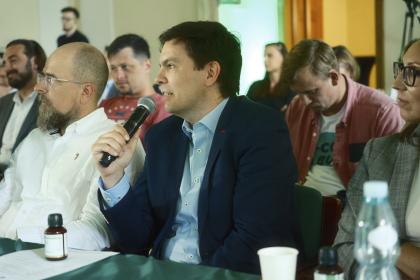
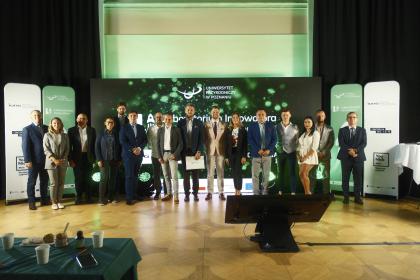
On 10 July 2025, DemoDay was held at the Runge College as part of the ‘Innovator's Laboratory – Creative Ideas Zone’ project. It was a meeting with representatives of companies, the academic community and business support institutions, during which solutions prepared by the project participants were presented.
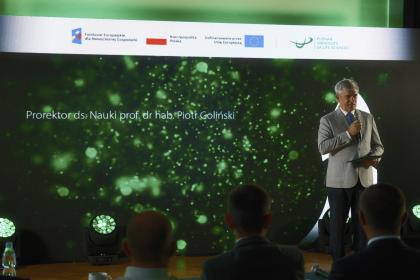
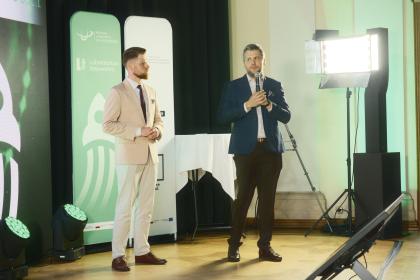
The first part of the event included lectures on the development of innovation – both within the framework of university activities and European projects. The participants were welcomed by the Vice-Rector for Science, Prof. Piotr Goliński, who emphasized the importance of such initiatives in the process of innovation and presented selected activities of the university, including the recently signed cooperation agreement with Poland in Silicon Valley.
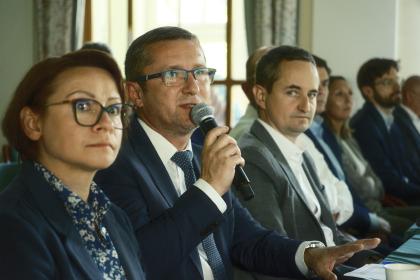
Next, Dr Krzysztof Wiaderek from the Department of Furniture Design gave a presentation on academic entrepreneurship. The next item on the agenda was speeches by representatives of IndustryLab (DGA S.A.) and Mazovian StartUPolis (Łukasiewicz Research Network – Institute of Exploitation Technology), who talked about further opportunities for developing ideas, including within the framework of acceleration platforms financed by the Polish Agency for Enterprise Development.
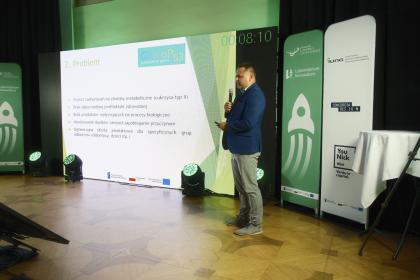
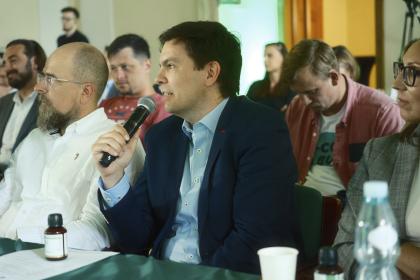
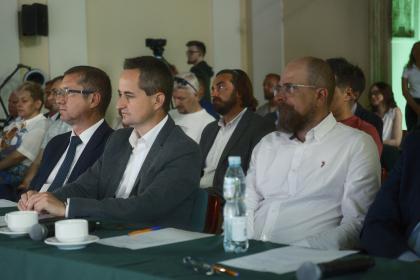
DemoDay is a summary of a six-month stage of work on the project, during which the originators – supported by mentors and scientists from the Poznań University of Life Sciences, acting as technology advisors – developed their concepts to the prototype stage (MVP). The highlight of the event was the presentation of the innovative solutions developed, which were evaluated by a jury (representatives of venture funds) and the audience.
Automatic BIM modelling (winner of the competition for the best presentation)
The first idea presented was BIMETRIA – an application for automatic BIM modelling and measurement of building materials based on 2D documentation. The originators – Łukasz Kochański, Konrad Rukat, Łukasz Bigorajski – noticed problems in the construction industry related to the time-consuming and inaccurate nature of traditional methods of estimating materials. So they created an application that automatically generates 3D models from 2D projections. In just a few steps, the user can obtain a BIM model and material lists.
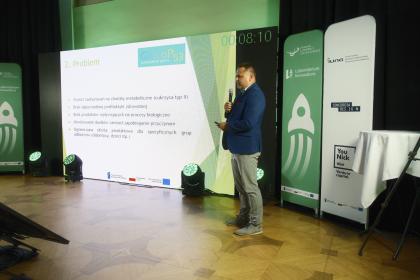
How to use the P53 protein in metabolic processes?
Another idea presented was GlucoP53 – a supplement supporting metabolic processes, including chemoprevention and anti-cancer effects. The originator – Grzegorz Sychowski – noticing the lack of prevention and the growing number of metabolic diseases (e.g. type II diabetes), decided to develop a product that would address the root cause of the problem.
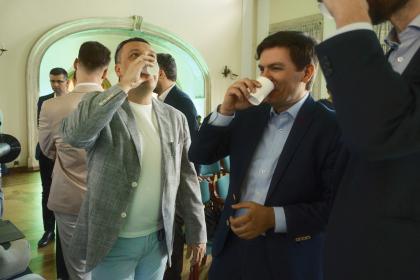
The composition of the supplement affects the activity of the p53 protein. The product is available in the form of a shot and concentrate. During DemoDay, it was possible to test it – the supplement is intended to be a solution for children and adults with glucose metabolism disorders.
Beauty industry – protection against dust and fumes
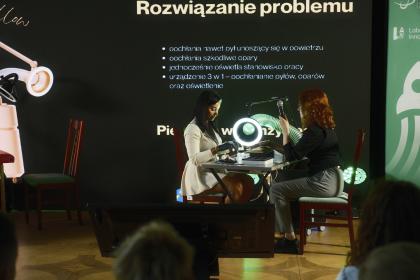
The ideas also included an innovation for the cosmetics market. Nail and eyelash stylists work with substances that can be harmful to health in the long term – nail dust and glue fumes are inhaled every day. Without protection, a nail stylist can absorb up to 4 g of dust per day, which amounts to approximately 4 kg per year. A pedicure stylist is exposed to dust containing, among other things, skin fragments, bacteria and fungi. Current dust absorption solutions are mainly designed for manicures and do not cope with vapours. The new device presented by its creator, Magda Wojtaś, is called Dreallow – a mobile dust and vapour absorber that also illuminates the workstation. Thanks to its design and double filters, it can be adapted to both eyelash and nail stylists' workstations.
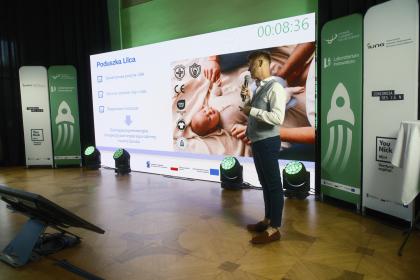
Ergonomic pillow for positioning infants (audience award)
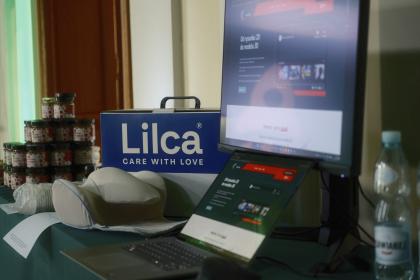
Nearly 58% of newborns in Poland have difficulties related to muscle tension asymmetry and hip dysplasia after birth. There is a lack of services providing knowledge about newborn care, contact with specialists, and tools supporting motor development. The originators (Przemysław Jeziorski and Julia Ratajczak-Jeziorska), who themselves encountered this problem, created an ergonomic pillow and an educational platform. LILCA supports the child's motor development through symmetrical body positioning, ensures healthy hip alignment and provides knowledge about childcare and child development.
Non-standard tomatoes as functional food
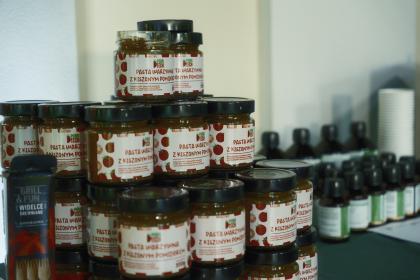
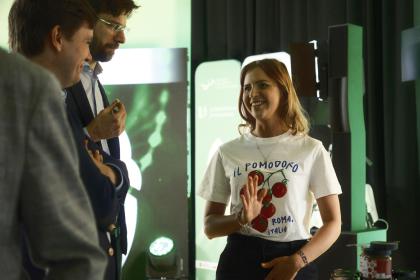
How to use tomatoes that do not meet commercial standards, even though they are a nutritious raw material? Anna Bajon, MSc, has developed a product from non-standard tomatoes – POMITECH paste. Thanks to the use of biotechnological processes and innovative processing methods, such as fermentation, the production of the paste not only reduces waste but also enriches the product with bioactive ingredients and postbiotics. Thus, it responds to the needs of conscious consumers. Tomatoes are given a second life, and the paste fits in with the idea of zero waste, combining high quality, nutritional value and health-promoting properties with a sustainable development approach.
The Innovator's Laboratory – Creative Ideas Zone is a project supporting people with ideas who have not yet had the space to develop them. The Poznań University of Life Sciences, as a content partner of the initiative, actively supports participants by providing expert knowledge and scientific facilities. There are still three DemoDay events ahead of us, during which further innovative solutions will be presented – the result of cooperation between originators, mentors and scientists.
Beata Biniaś, ambassador of the ‘Innovator's Laboratory – Creative Ideas Zone’ project
Editor: Iwona Cieślik, UPP press spokesperson

The project entitled ‘Innovator's Laboratory – Creative Ideas Zone’ is implemented with European Union funds under the European Funds for a Modern Economy programme, Priority II. An environment conducive to innovation, Measure 2.27 Innovator's Laboratory in accordance with the co-financing agreement No. FENG.02.27-IP.02-0020/23-00. The total cost of the project is PLN 7,143,671.70, including PLN 6,787,144.10 in co-financing from European Funds. The role of the Intermediate Body is performed by the Polish Agency for Enterprise Development (PARP) with its registered office in Warsaw (postcode 00-834), at ul. Pańska 81/83.