“Forests of the World” – Ethiopia 2026
The expedition of students and academic staff of the Poznań University of Life Sciences, part of the “Forests of the World – Ethiopia 2026” series, which took place on February 6–21, 2026, has come to an end. It was an intense time of exploring Ethiopian nature, landscapes, cultures and environmental issues – from big cities, through mountains and forests, to the savannas and lakes of the Great Rift Valley of Ethiopia.
We began our Ethiopian adventure in Addis Ababa. Although we only spent one day there, we tried to fully experience the atmosphere of the city. We visited the National Museum of Ethiopia, home to the famous Lucy – one of the most important paleoanthropological monuments in the world. For many of us, the opportunity to see Lucy was a special motivation to symbolically begin our journey with an encounter with the earliest history of humankind.
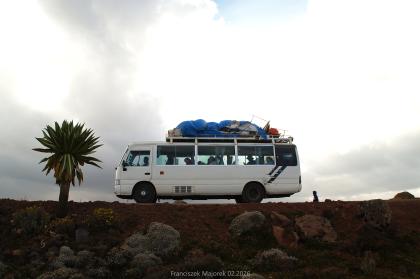
The following days were spent traveling southeast toward the Bale Mountains. Along the way, we passed numerous villages and vast agricultural areas. We arrived during harvest season—the time when teff, Ethiopia's staple grain, is harvested. We observed traditional farming methods, farmers working by hand, and carts pulled by small horses, loaded with straw. Women sifted grain by the roadsides, and surplus crops were taken to local markets.
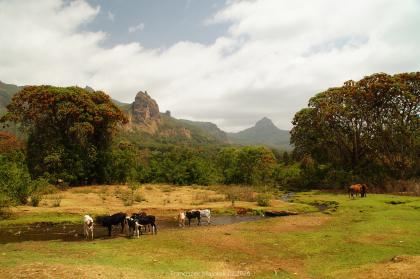
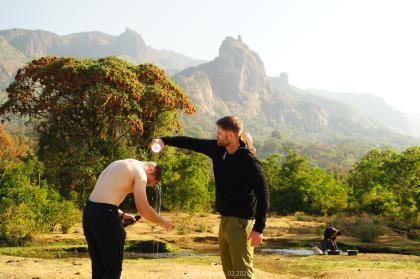
We will remember our first night in the Bale Mountains National Park for a long time. The silence of the mountain camp was broken by the sounds of bats and hyenas. The park is considered one of the wildest and most valuable natural sites in Ethiopia, known for its Afroalpine plateaus, rare animal species, and rugged high-mountain landscapes.
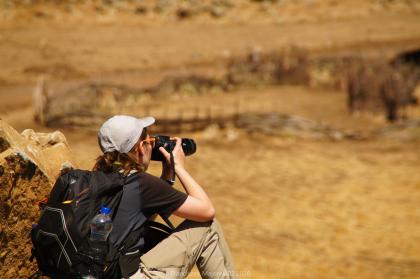
During our hikes, we moved at an altitude of about 3,700 meters above sea level. In such conditions, every step required effort, so we walked slowly, carefully observing our surroundings. The landscape was dominated by African junipers (Juniperus procera) – trees with thick, twisted trunks, growing extremely slowly in the harsh climate. They form characteristic mountain forests and play an important role in soil stabilization and the functioning of local ecosystems.
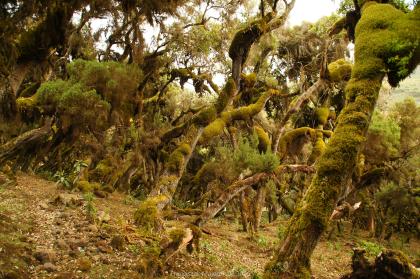
We were particularly impressed by the Harena Forest – one of the largest remaining mountain forests in Africa. Giant trees covered with lichens created an almost fairy-tale landscape. On the edge of the forest, we encountered a heath forest, where heather takes on a tree-like form – completely unknown in European landscapes.
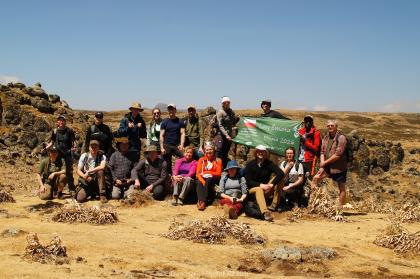
One of the most important moments of the expedition was reaching the summit of Tullu Dimtu (4,377 m above sea level), Ethiopia's second highest point, located on the Sanetti Plateau. The entire “Forests of the World – Ethiopia 2026” team stood on the summit, whose name in the Oromo language means “Red Mountain.” It was a moment of great satisfaction and shared success.
After leaving the mountains, we reached the town of Arba Minch, where we visited the village of the Dorze people, known for their weaving traditions. We learned about the daily life of the inhabitants, and together we prepared and ate kocho – a local product made from ensete (the so-called false banana tree). During the visit, Prof. Andrzej Węgiel was ceremoniously appointed deputy king of the village, and we returned with beautiful fabrics made by local craftsmen.
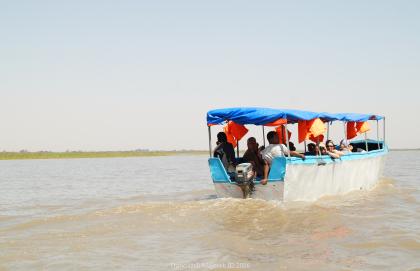
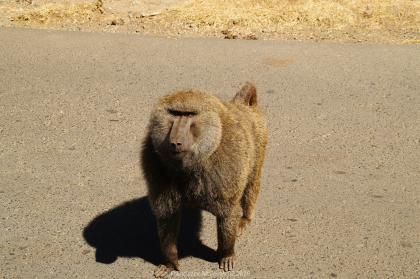
We also visited Nechisar National Park, located in the Great Rift Valley of Ethiopia. We reached the place by boat across Lake Abaya, with its characteristic brownish-red color. During the cruise, we caught a Nile tilapia, which was returned to the water after a short photo session. During our hike through the bush in high temperatures, we observed zebras, baboons, and Abyssinian gerra gazelles.
In the Senkele Swayne's Hartebeest Sanctuary, we had the opportunity to see Swayne's antelope, one of Africa's most endangered ungulate species and endemic to Ethiopia. The history of its conservation, similar to that of the bison in Poland, shows that consistent action can save a species from extinction.
During the trip, we also visited the Wondo Genet forest – a naturally rich area of humid mountain forests dominated by the sickle-shaped podocarp (Podocarpus falcatus). We reached natural hot springs associated with the activity of the Great African Rift Valley. Unfortunately, the large amount of plastic waste was striking, contrasting sharply with the high natural value of the place.
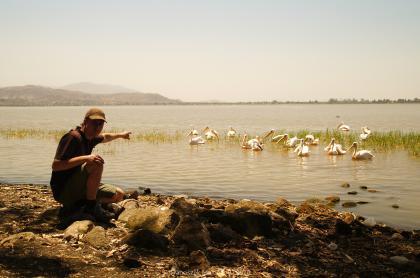
We spent the penultimate day at Lake Ziway and in Abiata-Shalla National Park. During the cruise, we observed hippos and the life of fishermen on the islands. At Lake Abiata, we admired flocks of flamingos and marabou storks, and in the Lake Shalla area, we saw African ostriches and hot springs with a harsh, almost volcanic landscape.
On the last day of the expedition, we went to the Ethiopian Highlands in search of geladas – unusual monkeys whose diet consists almost exclusively of grass. The long and peaceful observation of a large herd of these animals in their natural habitat became a symbolic and moving end to the entire expedition.
The “Forests of the World – Ethiopia 2026” expedition was not only a scientific and nature trip, but also an important cultural and social experience. It left us with knowledge, memories, and images that will remain with its participants for a long time.
The “Forests of the World” program is an original educational and research project carried out by the Faculty of Forestry and Wood Technology at the University of Life Sciences in Poznań. Its main goal is to enable students and researchers to learn about forests in different climate zones through direct contact with nature and local communities.
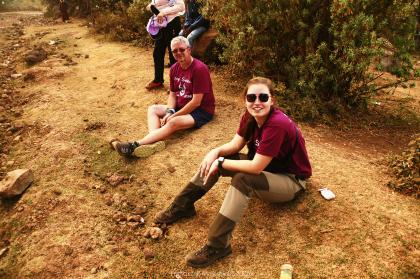
Since 2014, program participants have visited the Caribbean, Borneo, the Amazon, Kenya, Sumatra, Vietnam, Guatemala, the Dominican Republic, Uganda, Sri Lanka, Mexico, and in 2026, Ethiopia. This year's expedition was attended by 18 people – academic staff and students of the Faculty of Forestry and Wood Technology at the University of Life Sciences in Poznań. Among the participants was the winner of the “Forests of the World” Travel Scholarship – Krystian Waszkiewicz, recognized for his outstanding scientific and social activity. The scholarship holder's participation in the expedition was completely free of charge thanks to the support of Prof. Dorota Wrońska-Pilarek, PhD, Dean of the Faculty of Forestry and Wood Technology, who funded the travel scholarship.
The authors and coordinators of the “Forests of the World” program are Prof. Andrzej Węgiel, PhD, and Jolanta Węgiel, MSc, who have been passionately organizing expeditions and supporting young naturalists in their scientific and personal development for many years.
Website of the “Forests of the World” program: https://www1.up.poznan.pl/lasyswiata/
Faculty of Forestry and Wood Technology
Photos by Franciszek Majorek