Touch the campus – a tactile model of the Poznań University of Life Sciences campus
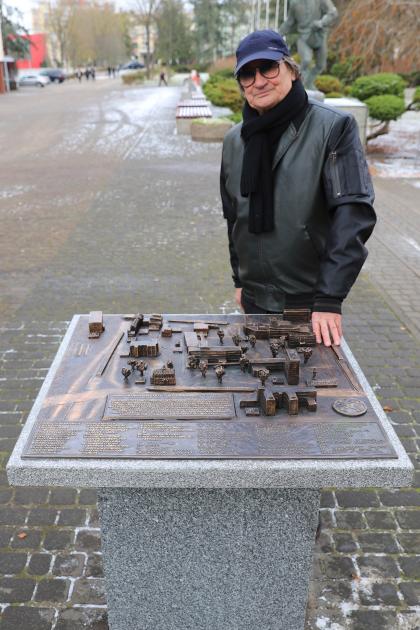
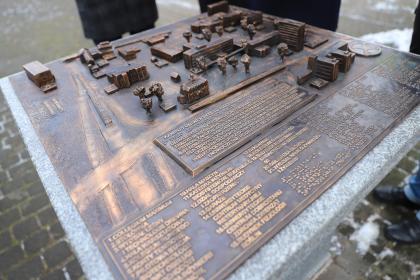
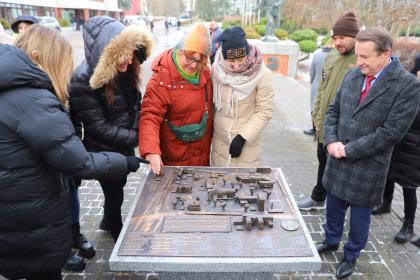
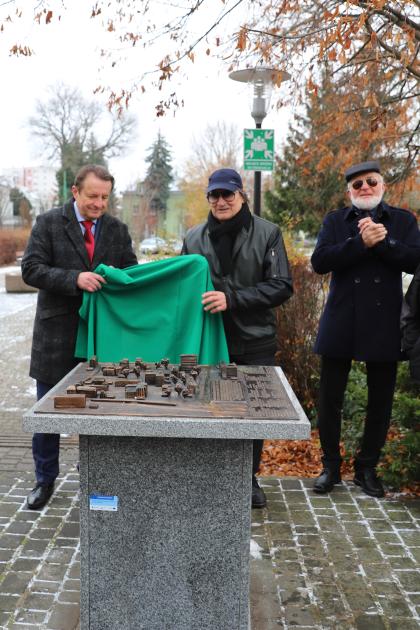
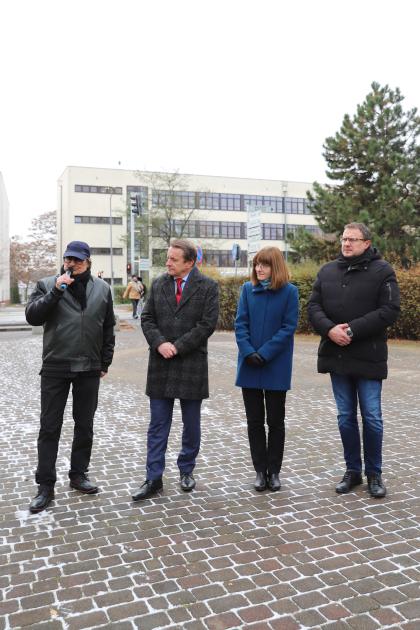
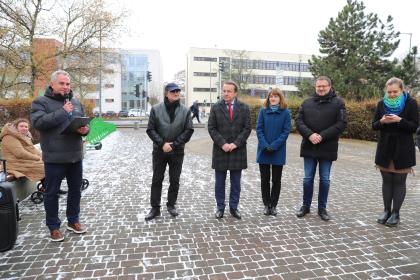
Opposite the entrance to the Collegium Maximum of the Poznań University of Life Sciences (PULS) at 28 Wojska Polskiego St., a tactile model of the PULS campus in Sołacz has been installed, designed for people with visual impairments. This solution allows users to “see” their surroundings through touch. Thanks to raised markings and descriptions in Braille, blind and visually impaired people will be able to better understand the layout of buildings, rooms and the area around the university.
The bronze model reproduces the spatial layout of the campus, showcasing over 20 buildings. It combines aesthetic value with topographical function, enabling blind people to learn the layout of the paths leading to individual buildings. This form of orientation will also benefit members of the academic community and visitors to the university, who will find it easier to find their way around the campus. It is not only a practical convenience, but also an expression of PULS's concern for the aesthetics of space and social responsibility.
Such solutions are not only practical, but also have educational and symbolic value. In addition, such a model will be an original and durable showcase for the university – something that will surely attract visitors' attention and demonstrate the university's commitment to accessibility.
The model was created by Roman Kosmala, a renowned artist who specializes in creating tactile models for people with visual impairments. His work includes three-dimensional models of the Old Market Square and Adam Mickiewicz Square in Poznań, as well as models of Ostrów Tumski, the Palace in Rogalin and the Roman Wilhelmi monument. "The model was made using the lost wax technique, which allows for extremely precise reproduction of architectural details. Thanks to this, it becomes not only a representation of space, but also a valuable sensory and tactile experience for people exploring the campus in this way. We wanted it to be not only aesthetic, but above all functional and accessible to everyone” – says its creator.
Importantly, the project fits into a broader concept of making urban space accessible to people with disabilities, which is being implemented in Poznań. The model will be visually and materially consistent with other installations of this type in the city.
The project was funded by European funds under the European Social Fund Plus, the European Funds for Social Development programme and the project "Accessible by Nature. Poznań University of Life Sciences as a University Without Barriers".
Iwona Cieślik, PULS Press Officer
Jarosław Władczyk